

I Still Cry for the Mountains
By Dave Daley, Butte County Rancher & CCA Past President
Follow up to “I cry for the mountains and the legacy lost | The Bear Fire” from Sept. 2020, Requiem for a Forest from April 2021, “Reflections on a tragedy….” from Sept. 2021, and “Reflections on a tragedy… Two years later” from Sept. 2022.
My family are cattle ranchers in the northern Sacramento valley. We have called Butte and Plumas County home since my ancestors came in the 1850’s searching for gold. We have a deep, almost reverent, connection to the land. We live and work in two different ecosystems — the oak woodlands of the foothills where our cattle graze from October to May, and the mountains of the northern Sierra Nevada where the cattle spend the summer on private and federal land.
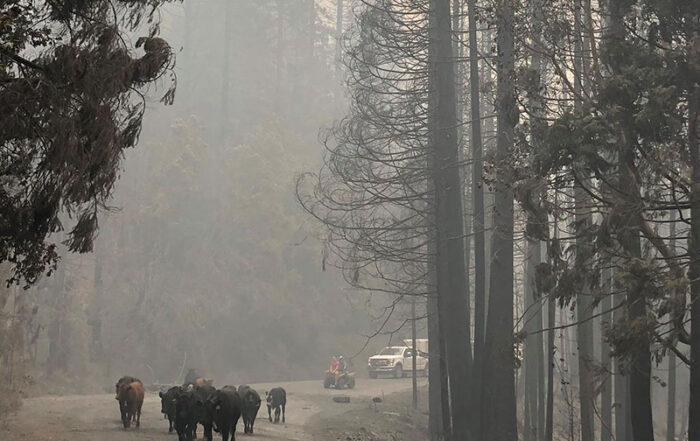
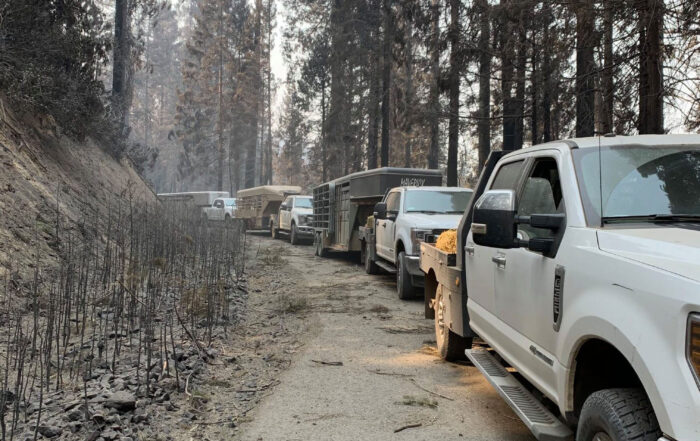
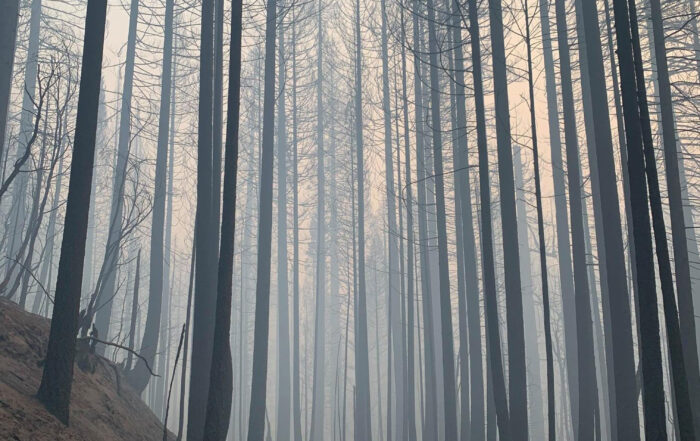
Five years ago this week we received news that the Bear/North Complex fire had jumped the Middle Fork of the Feather River into our grazing permit and in twelve hours burnt almost 80,000 acres. It eventually burnt close to 350,000 acres, killed 16 people, and became the 8th largest fire in California history. The initial maelstrom was fueled by winds over 50 miles per hour in steep, rugged and heavily timbered country. Words cannot describe the scope and intensity of that blaze.
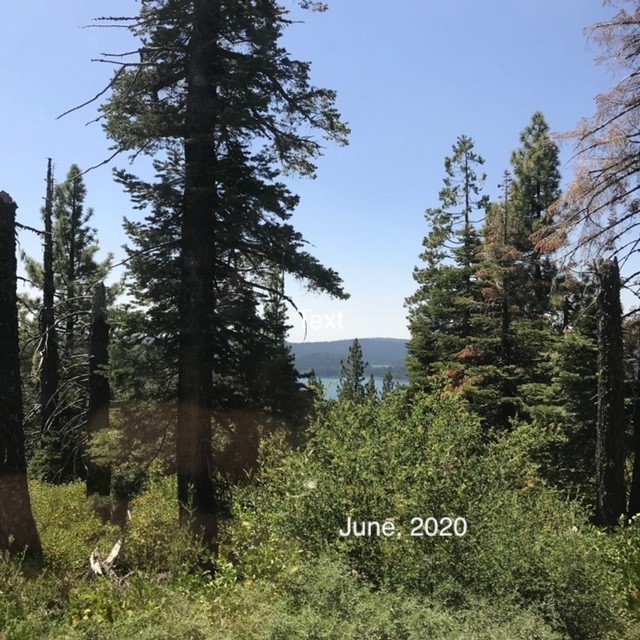
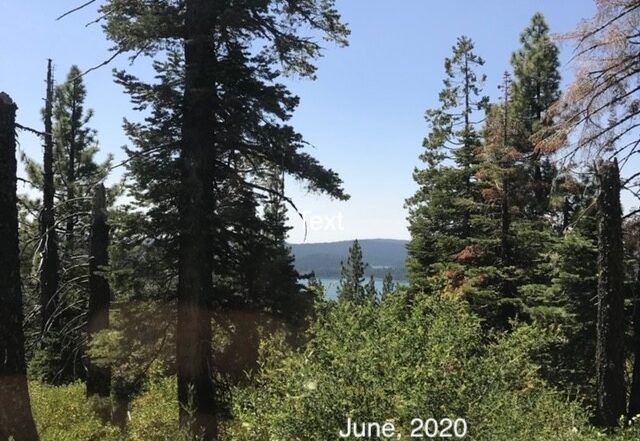
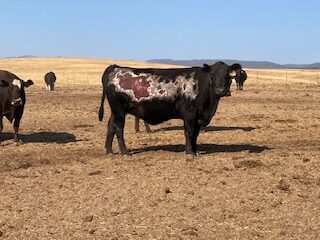
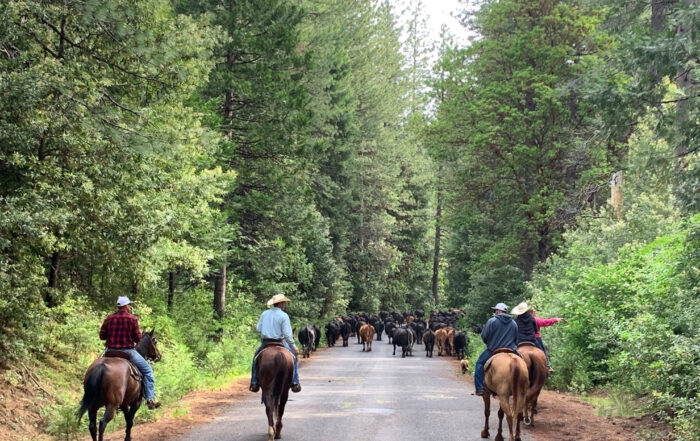
Frey Ranch – June 2020
This was a “let burn” fire that had started in mid-August and had been burning for almost three weeks in rough terrain. The United States Forest Service (USFS) made a conscious decision not to extinguish the fire because of difficult access and risk to firefighter safety. And the pervasive assumption that “good fire” will reduce fuel loads. This wasn’t a “good fire!”
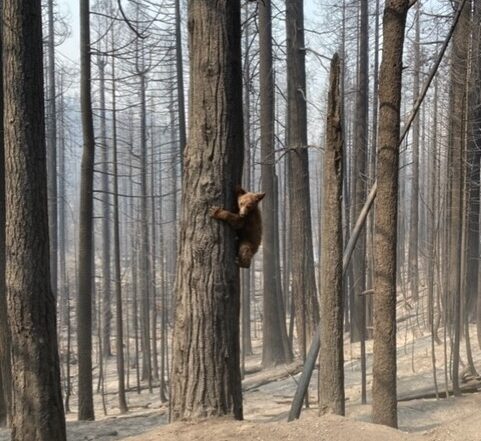
I understand the decision to prioritize firefighter safety, but aerial suppression might have protected personnel, and ultimately saved two towns, an entire ecosystem, the wildlife and my cattle. Instead, the USFS decided to expand the “let burn” area and drones were used to light more fire. The previously predicted deadly winds came soon after. I often wonder what would have happened if they had not purposely expanded the fire’s footprint. The outcome might have been the same, or perhaps some areas would have been spared leaving behind a patchwork of burned and unburned tracts, where wildlife, seedbanks, springs and the beauty of the mountains still existed. Instead, we only had complete and utter death. As we searched for survivors while the fire was still burning, I watched as the few remaining green spaces were intentionally burnt. What wildlife lived, did so no longer.
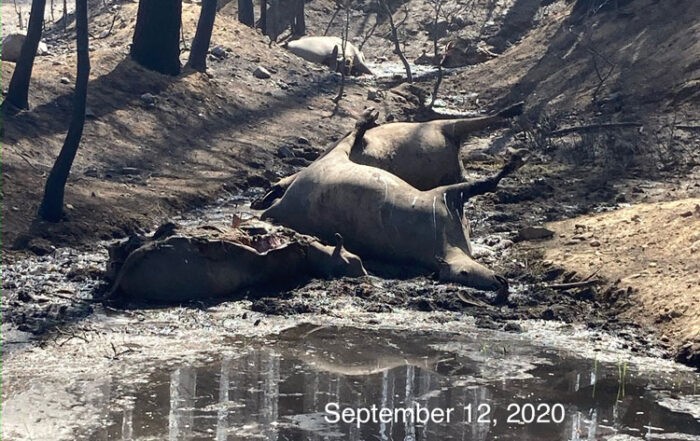
When the smoke finally cleared in early December, sixteen lives, the towns of Berry Creek and Feather Falls, and hundreds of homes were lost. And an incredibly beautiful ecosystem destroyed. Almost 400 cows and their calves were burnt to death, along with all the wildlife. We lost beautiful landscapes that we had loved for generations. The federal government never accepted responsibility nor paid for damages to private property or restored public lands. You can’t pay enough to replace life or replace an ecosystem that was literally cooked. The fire burned so hot that in places the soil was sterilized.
After five years, I have realized that we always view fire from the ecosystem we know best. If we have witnessed fire in a mountain, sagebrush, desert, juniper or grassland ecosystem, then we assume that is how the fire will respond, and the land will recover exactly as it is imprinted in our memory. And, if you are from an urban setting, you may have no vision of the nature of forest fires. So many of my ranching friends from other biomes have said to me, “I bet the country has recovered and your cattle must be doing great.” They don’t understand the impact of catastrophic fire in the big timber country of the Sierra Nevada. It hasn’t recovered and it may not in my lifetime. What we are doing to manage fire isn’t working in all ecosystems.
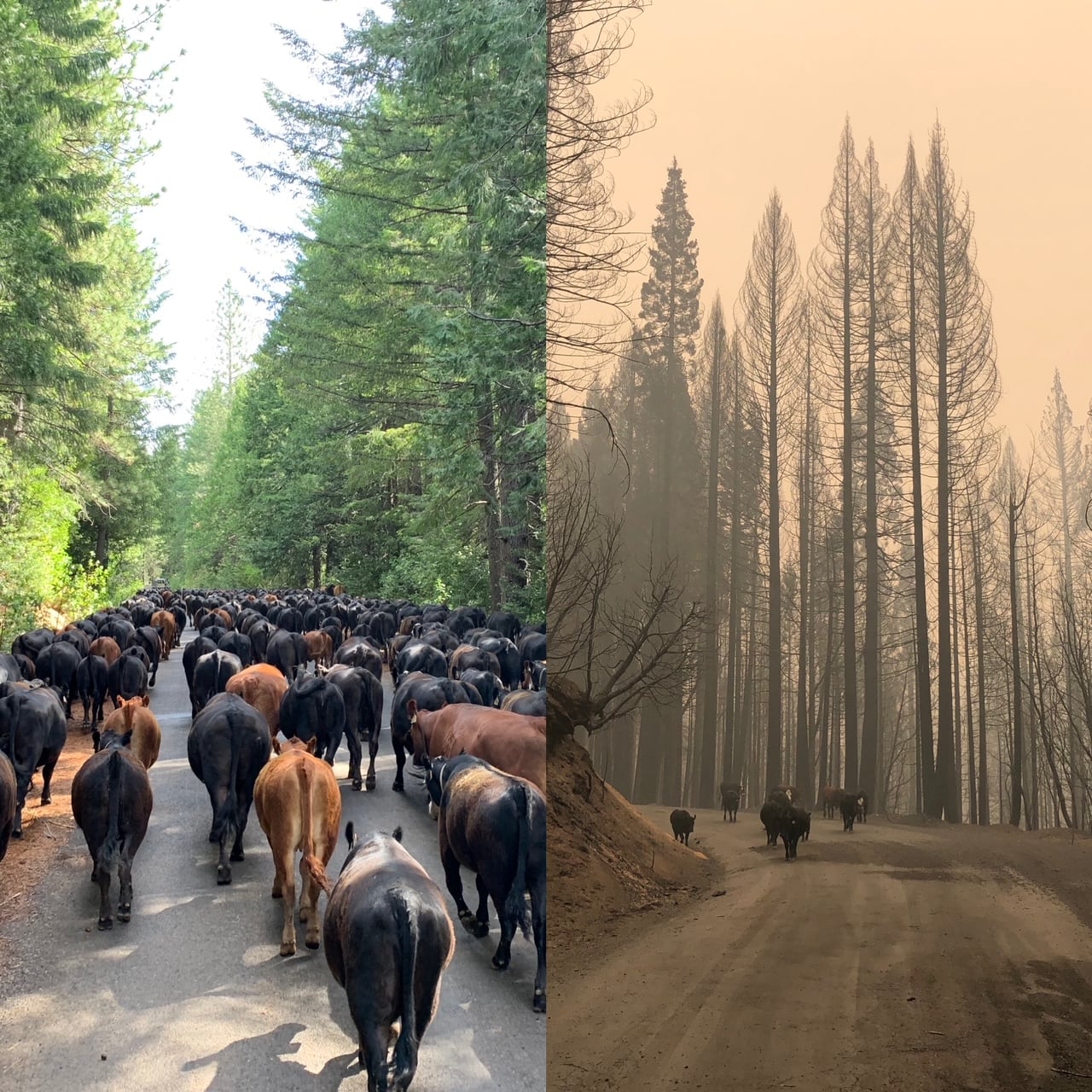
June 2020 vs. Sept. 2020
Creating effective approaches to fire requires us to tailor our response to the ecosystem; mountain, foothill, desert, valley; wet or dry; hot or cold. And then there are so many variables when the fire is active– topography, wind, humidity, vegetation type, fuel load, moisture, temperature, season. The diversity of landscapes requires flexibility and an awareness of and responsiveness to local conditions. The current model seems to be a one size fits all where the USFS approach is to create a perimeter, often miles from the fire, and intentionally burn to the line. How many acres are needlessly burnt? Or the fire grows and escapes, as was the case with the Bear/North Complex.
To be clear, this is not criticism of firefighting personnel, as they work in dangerous conditions that most of us cannot imagine. I applaud their work. This is simply a critique of the federal approach to managing forest fires.
Roughly half of California is federal land that is not controlled by Sacramento, but managed by Washington D.C. Both parties have failed the environment and the people. We never seem to focus resources on pre-fire fuels reduction, nor post fire restoration. We spend billions on suppression in a failed model that the government has created.
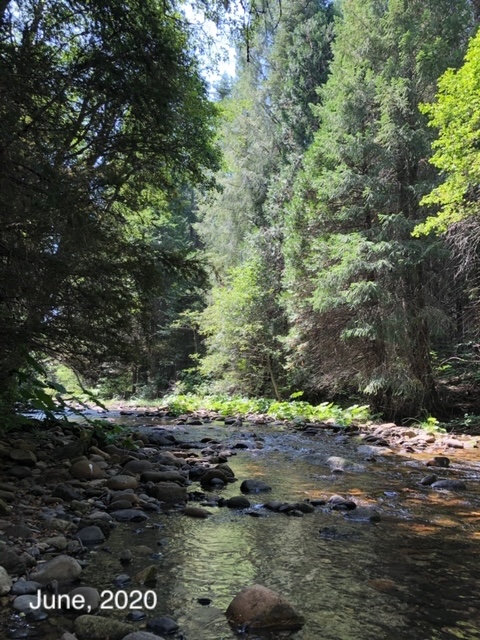
Fall River – June 2020
Policies developed from afar and without any understanding of what happens on the ground rarely work. Who makes federal decisions regarding fire suppression? Is it someone with local expertise who understands both the human and ecological implications of their decisions? No.
After the fire was finally put out three months later, I have yet to see a plan for post fire recovery and restoration. I have watched the burn scar turn into a brush field. There are no conifer seedlings, almost no wildlife and five years have passed. Catastrophic burns in big timber will convert to a brushscape in two or three years. The absence of policy, resources, and political will, just lead to more fuel for the next fire. We are left with standing dead trees surrounded by dense brush four feet deep.
The federal government has abdicated responsibility for post fire management. In our grazing permit, there has been a token attempt at dead tree removal on a few acres along one road. There appears to be little action taken to address the effects of forest fires, which may be due to resource limitations or policy constraints. If they don’t move quickly (which the USFS is incapable of), it is too late to salvage the timber, repair the roads, and open the campgrounds. A myriad of hurdles cause delay until nothing is done.
There is another model. Our grazing allotment is mixed public and private land. The private timber company immediately began harvesting as quickly as they could, and shortly thereafter began replanting. There aren’t any new conifers growing on the federal land five years later—the seedbank for trees was destroyed. Completely. Contrast that with the private timber company land, where dead tree removal began immediately and three million conifer seedlings were planted in three years. Sure, there may be an economic incentive to do so, but that effort is still essential for the health of the land.
There are alternatives to the current federal approach. The cost of megafires to taxpayers is astronomical. The Dixie fire in five northern California counties in 2021, a massive fire of 963,000 acres, also fueled by backfires, cost $637 million to suppress. What if those federal funds were directed to fuels reduction? Forest management could include fire prevention strategies such as thinning, timber harvest, grazing and the use of prescribed fire, designed for the specific ecosystem. I envision a time when fuel loads have been reduced to the point that a lightning strike would not be a major concern because our National Forests are healthy and natural fire has returned to the landscape. I know. I’m a dreamer.
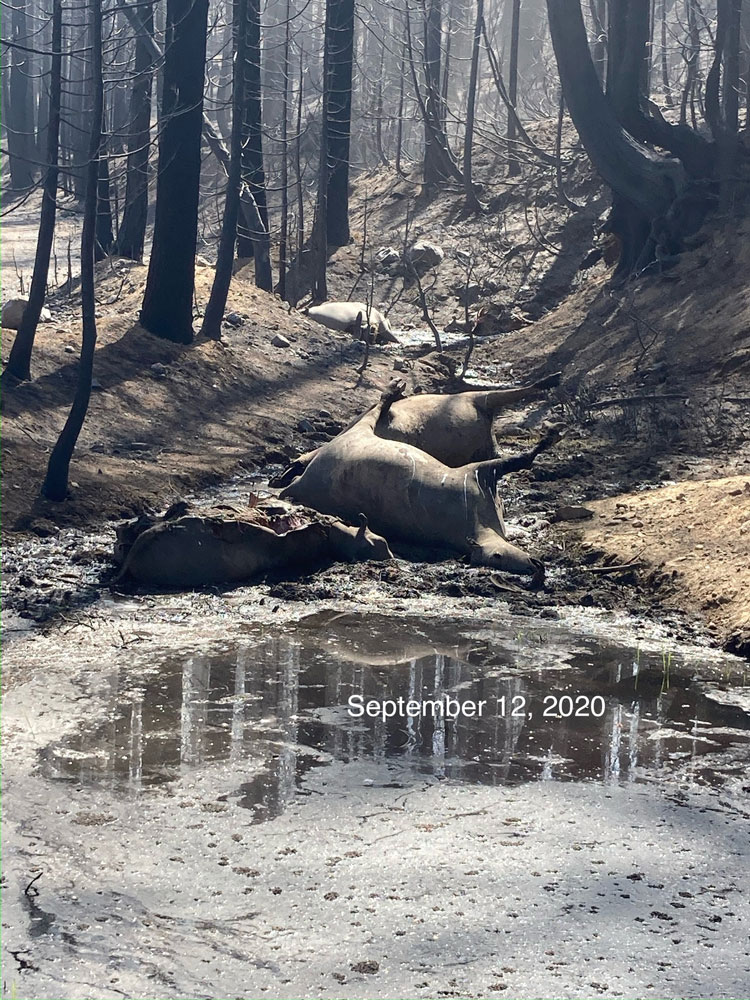
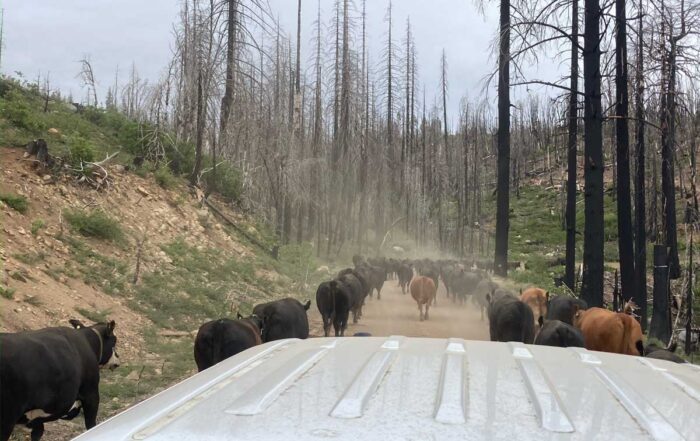
Looking for survivors during the fire on Lumpkin Ridge
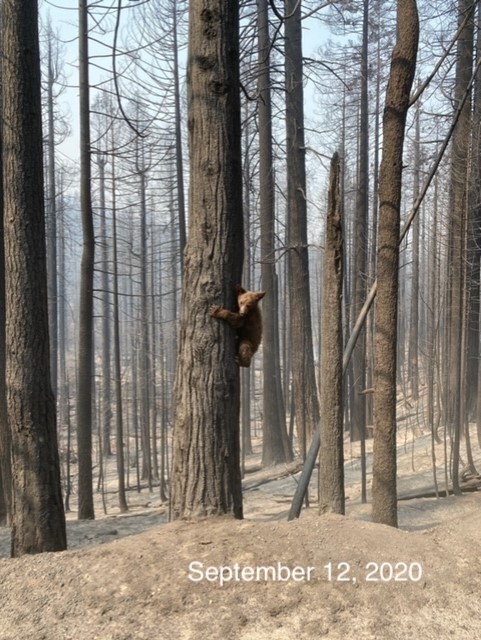
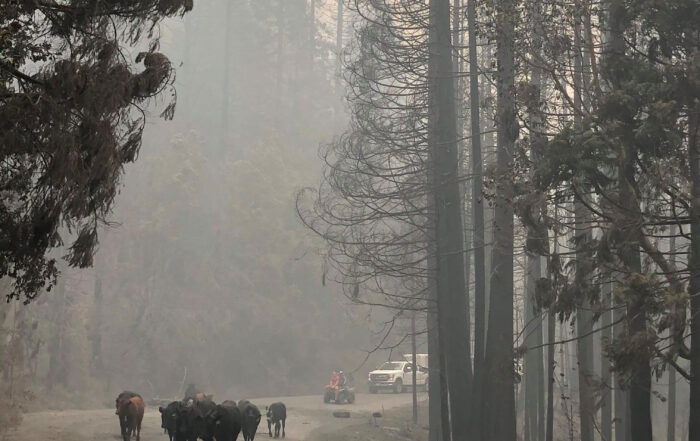
By Cascade Creek, during the fire
Some would suggest that climate change has resulted in the increasing severity of catastrophic wildfires. If that is the case, then fuel load reduction becomes even more essential. We can’t simply keep adding “fuel to the fire”, as we have for so many decades.
Post-fire management is just as critical to the health of our federal lands. Removing dead timber, replanting, stabilizing the soil, protecting waterways, repairing roads are all essential and should be prioritized in federal lands management. If we don’t do some of these basic steps, we will simply spend more money on the next fire and destroy the forest again.
Fire destruction and recovery is not just a California issue, nor a red state/blue state problem. This is federally owned land and has been managed the same under both Democratic and Republican administrations. I truly believe that the remote forest is “out of sight, out of mind”, and there are not enough of us in rural areas who witness the destruction to even have a voice. When there aren’t enough votes to get you elected, what politician really cares? And, if the public doesn’t understand how this devastation affects all citizens, there is even less political will for change. The effect on air quality, water quality, soil stability, wildlife habitat and so many other long term ecological impacts are quickly forgotten if you don’t see the destruction. I see it every day and can’t easily forget.
Are there simple answers. No. But we need all available options to reduce catastrophic fire. It seems we are developing small contingents that only advocate for their solution…. “Grazing sheep and goats is good, cattle are bad”, “thinning is good, logging is bad”, “prescribed fire is the only practical solution, everything else is not natural”, “leave it all alone, humans should never intervene.” Isn’t it possible that we need all tools available for forest health, and what works in one biome may not work in another? And the best way to deploy those tools is to listen to the people who live there. Listen to the land itself. Please.
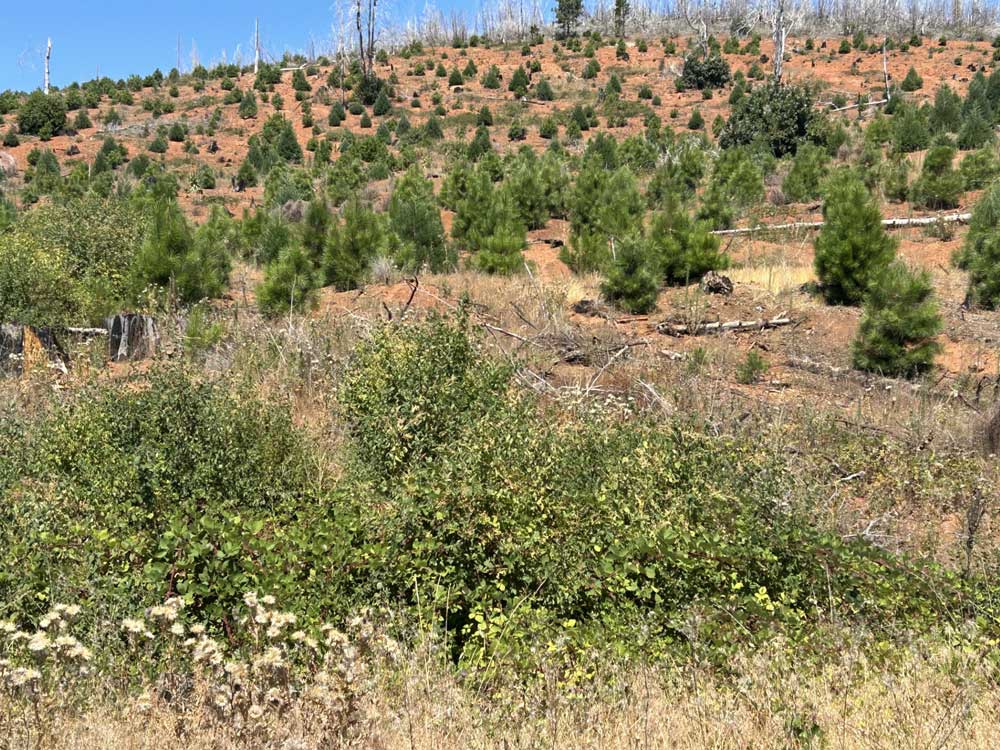
Private timber land, harvested and then replanted in 2021. Photo July 2025
The recovery is painfully slow in the Bear/North Complex fire. I realize the intensity of that fire is more severe than many others. It may require different solutions. My hope is that we can work as hard at reducing fuel loads pre-fire and at post fire restoration, as we do at suppression. Suppression requires crisis management when all hell breaks loose. Planned, thoughtful fuels reduction using all available strategies would benefit the land and the communities. And we cannot forget the critical importance of restoration. It would be far more cost effective for taxpayers, better for the economy and so much better for the landscape and forest health. I can only hope.
– Dave
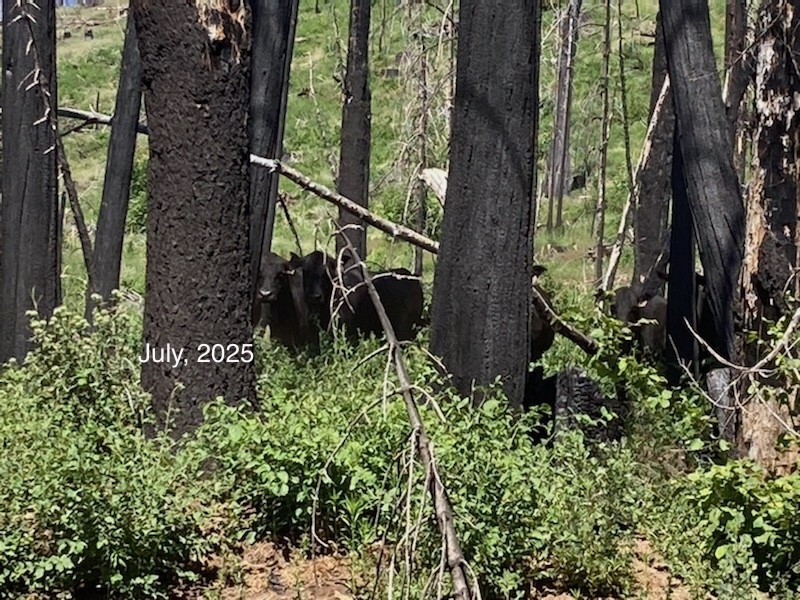
US Forest Land July 2025
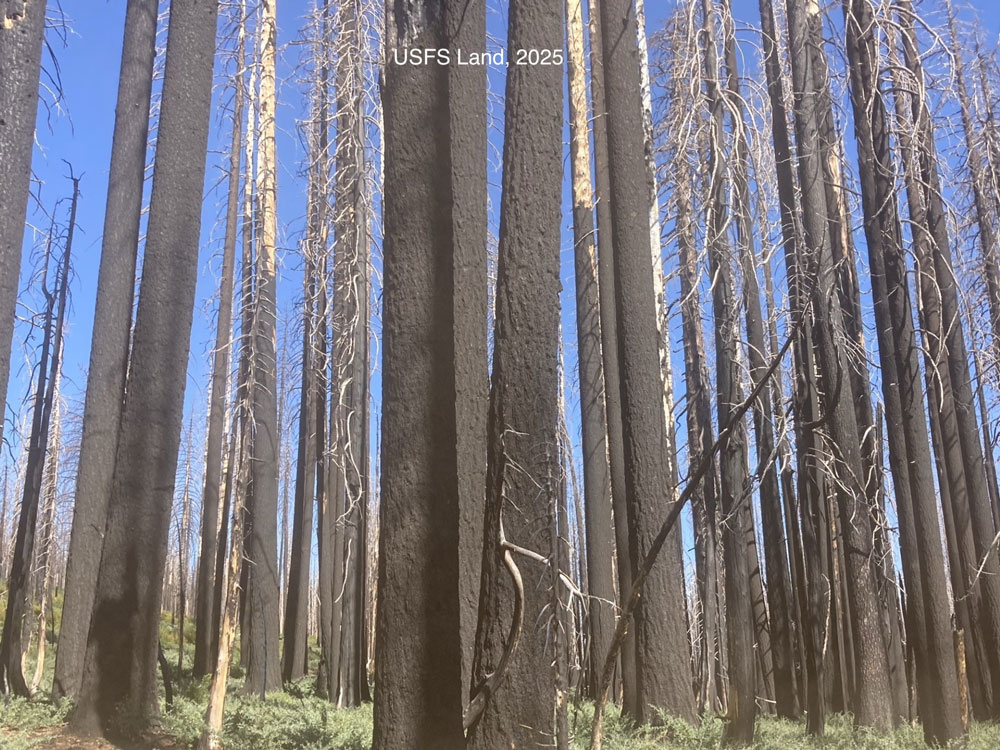
US Forest Land July 2025
Photos courtesy of the Daley family.